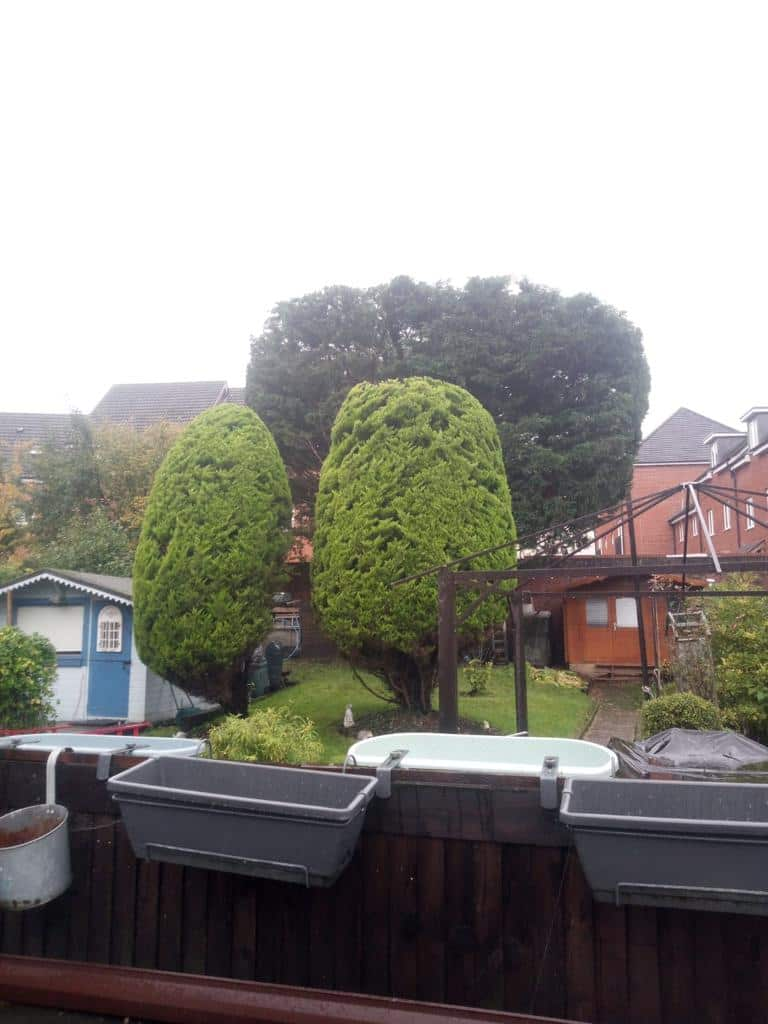
A tree can gradually lose its balanced appearance as branches compete for light, extend towards open space or recover from earlier damage. Previous pruning, strong winds and restricted growing conditions can also leave one side of the crown denser or heavier than the other.
Professional tree reshaping can often improve an uneven or overgrown tree by selectively managing its branch structure. The aim is not to create a perfectly symmetrical canopy, but to restore a more balanced, natural and manageable form while retaining healthy growth.
How Professional Tree Reshaping Can Improve a Tree
Tree reshaping is a planned form of pruning that considers the entire crown rather than cutting individual branches without reference to the tree’s overall structure. It may involve shortening overextended limbs, removing damaged growth and reducing dense sections that have become disproportionate.
The appropriate method depends on the tree’s species, age, health, position and ability to respond to pruning.
Why Do Trees Become Uneven?
Trees naturally adapt their growth to their surroundings. An uneven crown is not always evidence of poor health, but understanding its cause is important before any work begins.
Common reasons include:
- One side receiving more sunlight than the other
- Competition from nearby trees or structures
- Previous removal of a major branch
- Unbalanced or excessive past pruning
- Damage caused by strong winds
- Long branches developing towards open space
- Dead or declining sections within the crown
- Restricted room for natural growth
Identifying the reason for the imbalance helps determine whether reshaping will provide a lasting improvement.
Shortening Overextended Branches
A branch that extends well beyond the main canopy can place additional weight on its attachment point. It may also interfere with buildings, paths, driveways or other garden features.
Selective reduction shortens the branch back to a suitable lateral growth point. This retains a natural branch line while reducing leverage and bringing the limb closer to the overall shape of the crown.
Cutting a branch at an arbitrary point can leave a weak stub or encourage dense, poorly attached shoots. Correct pruning positions are therefore essential.
Balancing a One-Sided Crown
A one-sided tree may have more foliage and branch weight in one direction. Tree reshaping can sometimes improve this by reducing selected growth on the heavier side and carefully managing branches elsewhere.
The work must remain proportionate. Removing too much from one part of the tree can create a new imbalance or expose previously sheltered branches to different conditions.
A professional approach considers both the immediate appearance and how the tree is likely to regrow.
Managing an Overgrown Canopy
When a tree has become too broad or tall for its surroundings, crown reduction may form part of the reshaping process. This reduces the height, spread or overall volume of the canopy while retaining suitable growth points.
A well-planned crown reduction should:
- Preserve a recognisable natural outline
- Leave enough healthy foliage to support the tree
- Avoid unnecessary large wounds
- Reduce branches in proportion to one another
- Account for the tree’s species and condition
The objective is to make the tree more suitable for its location without destroying its natural structure.
Removing Dead and Damaged Growth
Dead, broken or weakened branches can make a crown appear irregular and may conceal its underlying form. Removing unsuitable growth often provides the first step towards reshaping.
Once deadwood and damaged limbs have been addressed, the remaining live crown can be assessed more accurately. Further pruning can then focus on improving balance and managing branch length.
Not every dead branch needs to be removed from every tree, but deadwood above frequently used parts of a garden usually deserves careful attention.
Improving Clearance Around the Garden
Tree reshaping can also create practical clearance where branches have begun to obstruct paths, entrances, patios or garden structures. The work may involve lifting selected lower branches or shortening growth that extends too far into a particular area.
Clearance pruning should be integrated into the shape of the entire canopy. Removing every branch from one side without balancing the remaining growth can leave the tree looking unnatural and place additional stress on other limbs.
Can Crown Thinning Improve the Shape?
Crown thinning removes a proportion of smaller branches from throughout the canopy. It may help where growth has become congested, branches are crossing or the internal crown needs selective management.
Thinning does not substantially reduce the external size of a tree. If height or spread is the main concern, crown reduction or targeted pruning may be more suitable.
Excessive thinning can encourage growth at the ends of branches and reduce the tree’s natural protection. Only a carefully selected amount should be removed.
Why Topping Is Not Tree Reshaping
Tree topping involves cutting major branches back to unsuitable points or leaving large stubs. Although it may reduce the tree’s size quickly, it can damage its structure and trigger clusters of rapid regrowth.
These new shoots may be weakly attached and can make the tree harder to manage in the future. Large wounds also take longer to close and may increase the opportunity for decay to develop.
Professional reshaping uses selective cuts to maintain viable branch unions and a natural crown framework.
Can Every Uneven Tree Be Fully Restored?
Reshaping has limits. A tree that has lost a major structural limb, developed extensive decay or suffered years of inappropriate pruning may not be capable of returning to its original form.
In these cases, the priority may be to improve stability, manage future growth and create the best achievable shape. Some trees benefit from staged pruning over more than one visit rather than one severe intervention.
A professional assessment can establish what improvement is realistic without placing unnecessary stress on the tree.
When Should You Arrange an Assessment?
Professional advice may be appropriate when:
- The crown has become noticeably one-sided
- Long branches are extending beyond the main canopy
- Growth is obstructing access or nearby features
- Previous pruning has left an unnatural shape
- Branches are crossing, rubbing or densely congested
- Storm damage has altered the structure
- The tree repeatedly produces difficult regrowth
- You are unsure whether reduction, thinning or selective pruning is needed
An assessment allows the work to be matched to the tree rather than relying on a standard pruning method.
Conclusion
Professional tree reshaping can improve the structure of an uneven or overgrown tree by shortening overextended limbs, managing dense growth and restoring a more balanced crown. The best results come from selective, proportionate pruning that respects the tree’s natural form and future development.
LM Tree Surgery Emsworth provides professional tree assessments, reshaping and pruning in Emsworth, Hampshire. If a tree in your garden has become unbalanced or difficult to manage, contact our team to discuss the most suitable approach.
Call us on: 01243 979 695
Click here to find out more about LM Tree Surgery Emsworth
Click here to complete our contact form and see how we can help with your tree needs.