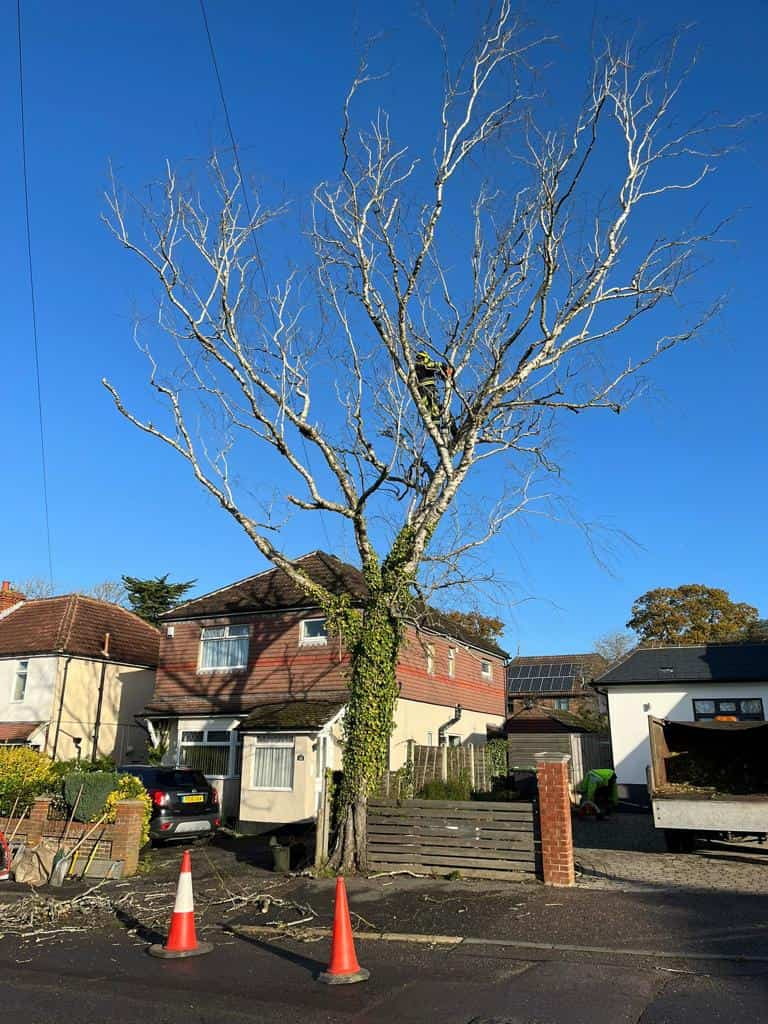
Trees are an important feature of many gardens and landscapes, providing beauty, shade, privacy, and environmental benefits. However, as trees mature, they can sometimes become too large for their surroundings or develop growth patterns that affect their health, safety, or appearance. Crown reduction is one of the most effective tree surgery techniques used to manage tree size while preserving the tree itself. When carried out correctly, it can improve safety, maintain tree health, and ensure the tree remains suitable for its location.
At LM Tree Surgery Emsworth, we provide professional crown reduction and tree surgery services throughout Emsworth, Hampshire. Understanding when a tree may benefit from crown reduction can help property owners make informed decisions about tree care and long-term landscape management.
What Is Crown Reduction?
Crown reduction is the process of carefully reducing the overall size of a tree’s canopy by shortening selected branches while maintaining the tree’s natural shape.
Unlike excessive cutting or topping, professional crown reduction aims to:
- Reduce the height and spread of the canopy
- Retain the tree’s natural appearance
- Improve structural balance
- Encourage healthy future growth
When performed correctly, crown reduction helps manage the tree without compromising its health.
When a Tree Has Outgrown Its Space
One of the most common reasons for crown reduction is when a tree has become too large for its surroundings.
This may occur when branches begin to:
- Extend over roofs
- Encroach on driveways and pathways
- Overhang neighbouring boundaries
- Dominate smaller gardens
Reducing the crown helps restore balance between the tree and the available space.
To Improve Safety
As trees grow larger, some branches can become excessively long or heavy.
This may increase the risk of:
- Branch failure during strong winds
- Falling limbs
- Excessive strain on major branches
- Potential hazards near frequently used areas
Crown reduction can reduce weight and stress throughout the canopy, improving overall safety.
Following Storm Damage
Severe weather can damage branches and alter the structure of a tree.
After a storm, crown reduction may be recommended to:
- Remove weakened growth
- Restore canopy balance
- Reduce future risks
- Encourage healthy recovery
Professional assessment helps determine the most appropriate course of action following weather-related damage.
To Increase Light Levels
Large trees can cast significant shade over gardens and outdoor living areas.
Crown reduction may help:
- Allow more sunlight into the garden
- Improve growing conditions for lawns and plants
- Brighten patios and seating areas
- Enhance enjoyment of outdoor spaces
This is particularly beneficial where excessive shading has become a concern.
To Reduce Wind Resistance
Dense canopies can act like sails during periods of strong wind.
Reducing the size of the crown can:
- Improve airflow through the canopy
- Reduce wind loading
- Lower stress on branches and the trunk
- Improve overall stability
This helps mature trees withstand adverse weather more effectively.
To Protect Property and Structures
Trees growing close to buildings may eventually create challenges if left unmanaged.
Branches can:
- Overhang roofs
- Interfere with gutters
- Obstruct access routes
- Contact nearby structures during windy conditions
Crown reduction helps maintain appropriate clearance while preserving the tree.
When Structural Imbalances Develop
Trees do not always grow evenly. Environmental conditions, previous pruning, or storm damage can lead to uneven growth patterns.
Crown reduction can help:
- Improve symmetry
- Balance weight distribution
- Correct structural issues
- Enhance the tree’s appearance
A balanced canopy often contributes to better long-term health and stability.
To Preserve Mature Trees
In some cases, crown reduction offers an alternative to tree removal.
Rather than removing a mature tree entirely, reducing the crown can:
- Address size-related concerns
- Improve safety
- Retain the tree’s character
- Preserve its environmental benefits
This allows homeowners to continue enjoying established trees within their landscape.
Why Professional Crown Reduction Matters
Crown reduction requires specialist knowledge and should always be carried out by qualified tree surgeons.
Poor pruning practices can lead to:
- Weak regrowth
- Increased disease susceptibility
- Structural instability
- Permanent damage to the tree
At LM Tree Surgery Emsworth, we provide professional services throughout Emsworth, Hampshire, including:
- Crown reduction
- Crown thinning
- Tree pruning
- Tree reshaping
- Tree inspections
- General tree surgery services
Our experienced team ensures all work is carried out to a high professional standard while prioritising the long-term health of the tree.
The Benefits of Ongoing Tree Management
Regular tree maintenance helps identify potential issues before they become serious problems.
Routine inspections and pruning can:
- Promote healthy growth
- Improve safety
- Enhance appearance
- Extend the lifespan of valuable trees
Proactive care is often the most effective way to maintain a healthy landscape.
Conclusion
Crown reduction is a valuable tree surgery technique that helps manage tree size, improve safety, increase light levels, and preserve the health of mature trees. Whether a tree has outgrown its location, developed structural imbalances, or requires maintenance following storm damage, professional crown reduction can provide an effective solution while retaining the tree’s natural beauty.
For homeowners and property managers in Emsworth, Hampshire, LM Tree Surgery Emsworth provides expert crown reduction and tree care services tailored to the needs of each tree. If you are concerned about the size, condition, or safety of a tree on your property, a professional assessment can help determine whether crown reduction is the right approach.
Call us on: 01243 979 695
Click here to find out more about LM Tree Surgery Emsworth
Click here to complete our contact form and see how we can help with your tree needs.